About
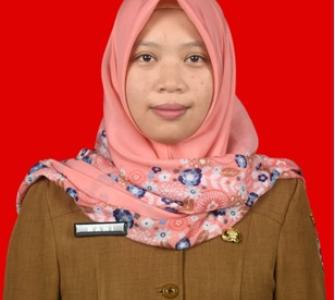
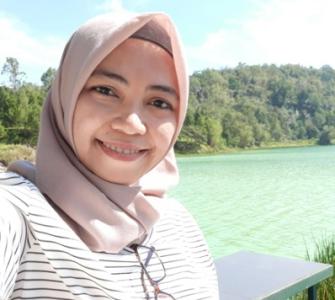
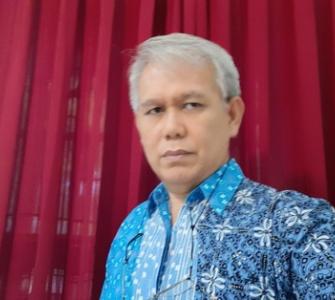
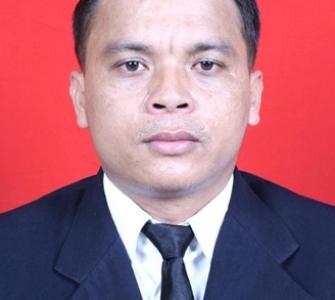
The 2012-2013 Fellows have been selected for technical support proposed by Conservation Strategy Fund (CSF) and within the framework of Initiative for Conservation in the Andean Amazon (ICAA), a program of the United States Agency for International Development (USAID).
Pablo David Campoverde Varela
Cooperation and Incentives to preserve the Amazon forest in Kichwa communities: An analysis from experimental economics, Ecuador
David's research analyzes, through experimental economics, community cooperation and economic incentives as institutional arrangements to preserve the Amazon Rainforest of indigenous Ecuadorian communities. The study results will provide important information about the behavior of communities to the application of different policies and can help affect government decision-making. In addition, this research will help with the creation of awareness workshops with communities about the conservation value of resources and environmental services they own.
David finished his studies in the Economics Department at the Pontificia Universidad Católica del Ecuador (PUCE) in 2012, specializing in natural resource management. He worked as a research associate at his university since 2010 and is currently a research associate at the Observatory of Social and Environmental Policy – PUCE. There, he collects and processes information to report on management and development in the environmental area, develops methodologies environmental policy, and monitors and reports on the national and international situation regarding environmental issues.
Enrique de la Montaña Andrés
Economic evaluation of wildlife hunting for food and illegal trade in the Amazon region of northeastern Ecuador, Ecuador
Enrique’s research analyzes the economics of both the illegal trading as well as the household consumption of bushmeat, in order to identify management strategies that guarantee hunting sustainability and can help maintain the lifestyles of indigenous people. He and his team will evaluate economic relevance and sustainability of bushmeat in some indigenous communities of Ecuador, as well as the impact of key economic parameters on off-takes of bushmeat through a model of hunter behavior.
Enrique has both a PhD in Ecology and a Master’s degree in Global Change and Sustainable Development from the University of Alcalá in Spain. His research and work are focused in Conservation Biology, as he works to combine human activities with conservation planning. He has experience working on threatened species conservation projects where traditional resources use is a key tool as well a conservation goal itself.
Sophía K. Espinoza Antezana
Why are Brazil nut harvesters complying with regulations? The case of the Wildlife Reserve Manuripi, Bolivia
This study evaluates the impact of Brazil nut gathering in the Manuripi National Wildlife Reserve in Bolivia. Through a comparative analysis of the likelihood of harvesters to work on private properties within the Manuripi Reserve versus those who work outside of it, we will construct a counterfactual scenario in order to establish an approximate measure of the impact of the hunting prohibition as a conservation tool for wildlife. This information will enable the Manuripi Reserve authorities to evaluate the results of the efforts that have been made each year since the implementation of the nut gathering prohibition in Manuripi Reserve. The results of the study will also generate information concerning the usefulness and impact of legal tools like the prohibition on the public’s behavior toward a natural resource.
Sophia studied Economics at the Universidad Mayor de San Simon in Cochabamba, Bolivia. She recently completed her Master’s degree in Natural Resources and Environmental Economics at the University of Concepción in Chile. She was introduced to CSF as a participant in the Economic Tools for Conservation and Natural Resource Management training course in Bolivia when she was developing her undergraduate thesis. Between 2008 and 2009, she collaborated in several studies with CSF in Bolivia as part of the Economic Research for the Andean Amazon Program. She was also a CSF Fellow in the Southern Tropical Andes Economic Research Program. She also worked with Instituto Socioambiental-Bolivia, coordinating a study on the economic and cultural benefits of protected areas in Bolivia and projects of sustainable use of vicuña wool by local communities.
Karin Cecilia Gonzales
Valuation and simulation of the attributes of the Cordillera Escalera Regional Conservation Area in the field of micro-basin Shilcayo for consumers of drinking water in the city of Tarapoto, Perú, Perú
This study tries to understand how downstream water users need, identify, assess, and associate any of the attributes of drinking water service in Tarapoto, Peru with the conservation of water in Cordillera Escalera Regional Conservation Area. This will permit Karin and her team to implement a payment system for environmental hydrological services in the area, or any other space that involves these same consumers.
The team expects that people will be able to identify some relationship between the quality of their sanitation service and the maintenance of the environment, and decide with some environmental awareness and economic rationality how much they are willing to pay for both of them.
Karin received her bachelor’s degree in Statistics from the Universidad Nacional Mayor de San Marcos, and later went on to obtain a Master’s degree in Demography and Population at the Universidad Peruana Cayetano Heredia. She has more than 12 years of experience in analysis and coordination of quantitative studies. She has participated in the designing of samples, formulation of instruments for data collection, data statistics modeling, creating indicators and reporting on these findings. Currently, she is working as a consultant in market research and socio-environmental studies for the extractive sector.
Patricia Siles
Economic valuation of eco-tourism services in municipal natural protected areas: Municipal Protected Area Pampas del Rio Yacuma (APM-PRY), Bolivia
Patricia's research aims to promote conservation of the Municipal Protected Area Pampas del Rio Yacuma, located in northern Bolivia. Tourism is one of the area's main attractions; however, tourism is increasingly becoming a threat to biodiversity and the benefits of these pristine lands. She and her mentor, Felipe Vásquez Lavin, will study the economic implications that may arise from potential uses of the reserve. Through the application of economic valuation tools, they will quantify, identify, and analyze these resources. When implementing management policies, only through the proper allocation of these values can misuse be prevented without significant costs to the protected area. This research hopes to help in promoting a sustainable development model to support the financial sustainability, management, development and conservation of the area.
Patricia has experience working in the field of environmental economics in projects related to protected areas in Bolivia. She has worked on economic analysis and valuation, economic management of tourism, environmental services, financial alternatives and community tourism ventures associated with the conservation of biodiversity in protected areas in Bolivia. She has worked as consultant for different national NGO and public institutions that work in conservation. She is a commercial engineer and a specialist in environmental economics. In 2007, she was a participant in CSF’s Economic Tools for Conservation and Integral Management of Projects in Protected Areas training program.
Sandra Viviana Zamora Rivera
Opportunity cost analysis of early implementation of REDD+ in the Ariari-Guejar-Cafre sector, Department of Meta, Colombia
Sandra and her team are going to analyze the opportunity cost of early implementation of REDD+ on the Ariari-Guejar-Cafre sector in the department of Meta, to provide technical and economic data to enrich the analysis of drivers and agents of deforestation. Her research will be used in the process of formulating the project design document of this initiative, by estimating the profitability and net benefit of land use, trend analysis of changes in use, and the estimation and mapping of opportunity costs.
She’ll be coordinating the development of activities during the investigation such as the application of socioeconomic survey tools, estimation of carbon content in forests of the region, and analyzing the results of socializing with communities. She looks forward to this incredible opportunity and to learning as much as possible.
Previously, Sandra was a field coordinator who worked implementing an early REDD initiative. She also held an influential position in the National Park Sierra de la Macarena in Colombia. She is a forest engineer and a currently working to complete her Master’s degree at the University of Buenos Aires in Natural Resources. She has 8 years of professional experience working in education, environmental awareness, conservation, and the development of environmental management plans. She has been involved with the National Parks System of Colombia since 2006, working on ecological restoration in protected areas. Over the last two years, she has provided technical support for the early implementation process of a REDD mechanism in the Ariari-Guejar-Cafre sector of Colombia.
Paula Andrea Zuluaga
Behavior of fishermen under different institutional arrangements in the Inirida Fluvial Star, Colombian Amazon, Colombia
Fisheries in the Amazon are a fundamental element of life in communities, not only because they guarantee food security but because of their cultural and traditional importance. This is the case of the indigenous communities of the “Inirida Fluvial Star” (IFS), in the Department of Guania, Colombia, where fisheries are a source of both food and income, given the commercial value of ornamental fish species in the area. The importance of its fisheries, the singularity of its ecosystems, and the existing threats to its sustainability have motivated the protection and conservation of the IFS. WWF Colombia and the National Authority of Aquaculture and Fishing (AUNAP) recently signed a Memorandum of Understanding (MoU) to support the development and formalization of fisheries management agreements among the IFS communities. This investigation is framed on this WWF-AUNAP MoU, and aims to study the behavior of IFS fishermen under different institutional arrangements that could be included in formal fisheries management plans. To do so, Paula and her team will use experimental economics, participatory methodologies and an agents-based model.
Paula is an ecologist with experience in natural resource management within rural communities. She has experience using quantitative and qualitative methodologies, such as experimental economics, surveys, interviews, systems dynamic modeling, agents modeling and participatory methodologies. She has specific expertise in identifying socio-ecological conflicts, supporting the process of developing fisheries agreements, and in conducting studies about water use and management in rural communities in Colombia.
CSF mission
The mission of Conservation Strategy Fund is to teach environmental organizations around the world to use economics and strategic analysis to conserve nature.
CSF e-newsletter
I want to know the latest conservation news, and hear about upcoming CSF projects and courses.
Upcoming CSF Courses
CSF offers training in economic tools to empower local conservation organizations, decision-makers, and communities.