About

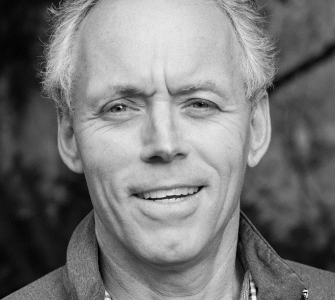
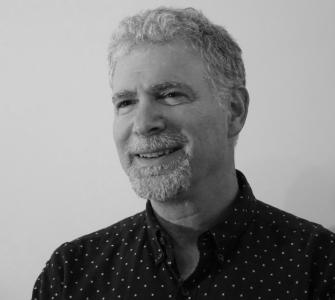
Picture of Brian Murray

Brian Murray

Research Professor and Director for Economic Analysis, Nicholas Institute, Durham, North Carolina

Dr. Brian C. Murray is Director for Economic Analysis at the Nicholas Institute for Environmental Policy Solutions and Research Professor at the Nicholas School of the Environment at Duke University. He is widely recognized for his work on the economics of climate change policy, including the design of cap-and-trade policy elements to address cost containment and inclusion of offsets from traditionally uncapped sectors such as forestry and agriculture. Members of the United States Congress and their staff have sought the counsel of Dr. Murray and Nicholas Institute colleagues as they have developed climate change legislative proposals. Dr. Murray has been invited as a co-author of several national and international assessments of forest resources, especially related to climate change. Of particular note, he was a convening lead author of the Intergovernmental Panel on Climate Change’s Special Report on Land Use, Land Use Change, and Forestry, which confers status shared by all other IPCC authors as joint contributors to the IPCC’s 2007 Nobel Peace prize. He has convened several forums of economic modeling experts to examine and communicate the results of their climate, energy and land use policy efforts to the public and private sectors. Prior to the Nicholas Institute in 2006, Dr. Murray was Director of the Center for Regulatory Economics and Policy Research at RTI International, a university-affiliated not-for-profit research institution.

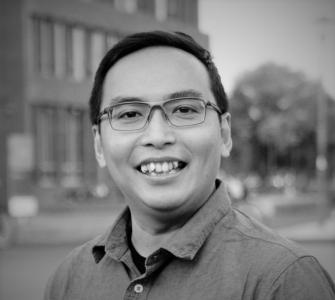
Picture of Dr. Carlos Eduardo Frickmann Young

Dr. Carlos Eduardo Frickmann Young

National University of Rio de Janeiro, Rio de Janeiro, Brazil

(Doctoral Thesis: "Economic Adjustment Policies and the Environment: A Case Study of Brazil”: Advisor: David Pearce); Master of Economics, Institute of Industrial Economics, National University Rio de Janeiro, 1992 (Master’s Thesis: “Sustainable Rents from Mineral Extraction in Brazil”; Advisors: Joáo Carlos Ferraz e Ronaldo Serôa da Motta); Post-Graduate in Public Policy, United Nations/ILPES/Cepal (Santiago, Chile), 1990 (with distinction); Bachelor in Economic Sciences, Faculty of Economics and Administration, National University of Rio de Janeiro, 1986 (graduated cum laude). Adjunct Professor and Coordinator of Research Group for Environmental Economics and Sustainable Development, Institute of Economics, National University of Rio de Janeiro. Consultant to various research projects on economic development and environmental economics. Areas of interest: Global Warming, Socio-Economic Causes of Biodiversity Loss, Trade and the Environment, Energy and Sustainable Development, Economic Instruments for Environmental Management, Environmental Accounting and Natural Resource Valuation, with a range of publications on these topics. President of the Brazilian Society of Ecological Economics (ECO_ECO), 1996-99.

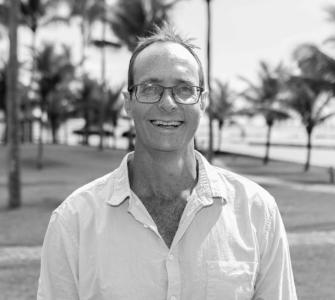
Picture of David Johnson

David Johnson

Economics Lecturer, Harvard University, Massachusetts

David is currently an Economics Lecturer at Harvard University. For the past several years, he has been teaching Microeconomics and Macroeconomic analysis at both Wellesley College and Harvard University. Previously, David taught economics for four years at Stanford University. He has received wide recognition for his teaching talent and animated style, and strives to make his courses interesting, important and relevant. David has been teaching in CSF’s courses since 2004.

David says this about CSF: "Any economist worth his salt has but a single goal in mind: harnessing the tools of economic analysis to support improvements in the human condition. CSF’s raison d’être is its belief that sustainable environmental resource use is singularly responsible for the future of that human condition. The CSF training model works brilliantly precisely because it begins with talented, experienced “students” already armed with a demonstrated commitment to environmental awareness. As a scholar, I have the enviable task of helping them fit that last piece of the puzzle – those economic tools that add academic rigor to what is often misguidedly perceived as purely emotional tree-hugging…the “hard head” to accompany the “soft heart.” As an organization, CSF has always impressed me with their unwavering commitment to the importance of economics and markets in saving the planet. I continue to marvel at their resilience in withstanding what one might call a “dual skepticism” of their mission: skepticism from those who doubt that climate change is real AND skepticism from fellow environmentalists who doubt that economic analysis is the way to save our planet. CSF courses boast participant lists that regularly send me straight to Google Maps! But no matter how large or small their countries or their conflicts, students leave CSF courses energized, empowered, and equipped with the proper tools to make their cases back home. We have a term for those groups not afraid to fight multiple headwinds in pursuit of a cause they know in their heads and hearts is right: leadership."

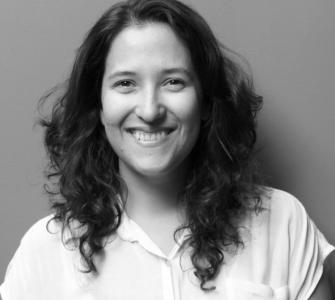
Picture of Felipe Vásquez Lavin

Felipe Vásquez Lavin

Assistant Professor, Department of Economics, University del Desarrollo, Concepción, Chile

Felipe Vásquez Lavin is an Assistant Professor in the Department of Economics at the University del Sarrollo. From 2008-2012 he was the Academic Director of the Masters in Economics of Natural Resources and Environment and the Masters program in Applied Economics as well as Assistant Professor at the Universidad de Concepción, Chile. Prior to this, he was a Professor and Visiting Scholar at the Department of Agricultural Economics and Natural Resources at the University of California, Berkeley and the Environmental Economics Unit of the Department of Economics, University of Gothenburg. His areas of teaching and research interests include Statistical Models, Micro-Econometrics, Environmental Economics and Natural Resources, and Environmental Economic Evaluation. He received a degree in sales engineering at the University of Concepción in 1991, and continued on to receive his Ph.D. in Agricultural and Natural Resources at the University of California, Berkeley, in 2007.

Picture of John Dixon

John Dixon

World Bank Institute (retired), Kailua, Hawaii, USA

John Dixon was the lead Environmental Economist at the World Bank and is widely known for his work on applied environmental economics, especially the valuation of environmental resources. He has published numerous books on economic valuation and its applications to various ecosystems, as well as many articles on these and other themes. Before joining the World Bank in 1990, John was a researcher at the East-West Centre in Honolulu, and also worked with the Ford Foundation in Indonesia. His recent work has focused on the economics of parks and protected areas, especially marine parks and tourism. Recent professional work includes activities in East Asia, Latin America and the Caribbean. John holds undergraduate degrees in Chinese and Economics from the University of California at Berkeley and a Ph.D. in Economics from Harvard.

Picture of Jorge Higinio Maldonado

Jorge Higinio Maldonado

Associate Professor in Economics and Researcher at the Center for Economic Development (CEDE), University of the Andes

Jorge Maldonado Higinio is an Associate Professor in Economics and a Researcher at the Center for Economic Development (CEDE) at the University of Andes. Jorge has a Ph.D. in Agricultural Economics, Environment and Development from Ohio State University, with degrees in Environmental Economics and Natural Resources from the University of the Andes and University of Maryland and Economics from Ohio State University. He has worked in the field of natural resource economics since 1998 as a teacher and researcher on issues related to biodiversity, fishing, common pool resources and management of protected areas, with emphasis on the relationship between development, poverty and environment. He is currently assistant program manager of the Latin American and Caribbean Environmental Economics Program (LACEEP).

Picture of Jorge Madeira Nogueira

Jorge Madeira Nogueira

University of Brasilia, Brazil

Jorge Madeira is Professor and Head of the Economics Department of the University of Brasilia (UNB) in Brazil, where he has been working since 1983. Jorge received his Bachelor's and Master's degrees from the Federal University of Rio de Janeiro, and completed his PhD at the University of London in 1982. Between 1991 and 1995 he was a visiting Professor at the University of Cornell as a Fulbright Scholar. Jorge has published extensively on the economics of agriculture and the environment in Brazil and abroad.

Picture of Juan Camilo Cárdenas

Juan Camilo Cárdenas

University of the Andes, Bogotá, Colombia

Juan Camilo is a Professor of Economics at the University of the Andes in Bogotá, Colombia. The central interest of his work is the analysis and design of institutions that promote cooperation between individuals and help solve social dilemmas in the most efficient, equitable, democratic and sustainable way possible. His research combines game theory, experimental economic techniques, and environmental valuation to explore the rationality of people’s behavior and how formal and informal institutions determine behaviors and decisions that affect one’s own well-being as well as that of others.

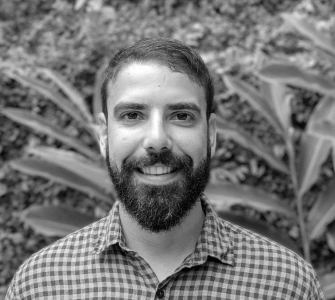
Picture of Linwood Pendleton

Linwood Pendleton

CSF Board Secretary and Acting Chief Economist for NOAA (National Oceans and Atmospheric Administration), Washington, D.C., USA

Linwood Pendleton is the Acting Chief Economist for NOAA (National Oceans and Atmospheric Administration). Prior to this, he was a Senior Fellow, Director of Economic Research, and Director of the Coastal Ocean Values Center at The Ocean Foundation. He was also an Associate Professor in the School of Public Health at UCLA and maintains an adjunct position there. His current research focuses on the economics of environmental goods and services, especially those in the coastal zone.
Linwood has been teaching with CSF since 1999 and has experience both in the United States and abroad with environmental valuation, coastal resource management, and the economics of marine protected areas. Linwood has worked internationally on recreation demand of tropical coral reefs and Costa Rican National Parks, and on issues of dams, non-timber forestry, and the economic causes of tropical deforestation in Latin America and Africa. He is involved with the National Ocean Economics Project, the Southern California Beach Valuation Project, and the California Regional Study of the Coastal Ocean Observing System. He is also a member of the Santa Monica Bay Restoration Commission’s Marine Technical Advisory Council, and a Director of the Aquarium of the Pacific's Marine Conservation Research Institute.

Linwood has a Masters in Biology with a focus in Tropical Ecology from Princeton University, a Masters in Public Policy from Harvard University, and a PhD in Natural and Environmental Resource Economics from Yale University.

Picture of Maria Claudia López.

Maria Claudia López.

Assistant Professor, Universidad Javeriana, Bogotá, Colombia

Maria Claudia López, an assistant professor at the Universidad Javeriana in Bogotá, Colombia. She is an economist, specializing in natural resources and environmental economics with a master's in rural development from the Universidad Javeriana in Colombia, and a PhD in Resource Economics from the University of Massachusetts, Amherst. She also completed a 2 year postdoctoral fellowship working with Elinor Ostrom at the Workshop in Political Theory and Policy Analysis at Indiana University on issues of governance, common property, and institutional analysis. Her research uses multiple methods, including field experiments from behavioral economics, institutional analysis, econometrics, ethnography, and participatory research, to understand how rural communities can collaborate successfully in the management of commonly held natural resources. She is firmly committed to participating in work projects that have both theoretical significance and practical benefits for the communities she work with. She have conducted experiments in behavioral economics in Colombia, Spain, and Peru, and she is also developing research in other countries.

Picture of Mauricio Medinaceli

Mauricio Medinaceli

Economist, Bolivia

Mauricio Medinaceli was previous the Minister of Hydrocarbons in Bolivia from 2005 to 2006 and the coordinator of Hydrocarbons in OLADE, based in Quito, Ecuador, from 2008-2010. He has a degree from Bolivian Catholic University and has completed postgraduate studies in both Chile and Germany. Mauricio has also acted as a consultant to the World Bank, CAF, BID, PNUD, GTZ, PIEB, PKF Consulting Group, Prisma Energy America Do Sul, and Cámara Boliviana de Hidrocarburos. He has taught at numerous universities, including FLACSO University of the Americas in Ecuador, Catholic University, University of the Andes, as well as others in Bolivia. Mauricio has written several publications and books on hydrocarbon.

Picture of Dr. Ronaldo Seroa da Motta

Dr. Ronaldo Seroa da Motta

Santa Úrsula University, Rio de Janeiro, Brazil

Ronaldo Seroa da Motta is currently the Environmental Studies Coordinator for IPEA (Institute of Applied Economic Research), a federal research institute, and a Professor of Environmental Economics at Santa Úrsula University, Rio de Janeiro. He has conducted diverse projects relating to environmental policy, market mechanisms, economic valuation, social accounting of natural resources, and distributional effects and economics of environmental regulation. Additionally, he has conducted research for World Bank projects, has been the regional coordinator for Latin America for a UNEP (United Nations Environment Programme) project, and has been the Brazilian coordinator for Environmental Accounting of Forests project of FAO/United Nations.

Picture of Sarah Cordero

Sarah Cordero

Instructor, ULACIT, Costa Rica

Sarah Cordero is currently the Dean of the Ulacit Business School in Costa Rica. Previously she was an Assistant Professor at the Central American Institute for Business Administration (INCAE), with a focus in environmental economics and project appraisal. She is currently a Ph.D. candidate at the Massachusetts Institute of Technology (MIT), and she received a Master’s in Public Administration from Harvard University in 1992. In addition to posts at Ulacit and INCAE, she has also been a professor in the Program on Investment Appraisal and Management at the Harvard Institute for International Development. Sarah has extensive teaching experience at various institutions including MIT, the John F. Kennedy School of Government at Harvard, and the Technological Institute of Costa Rica. Sarah has taught in CSF’s courses in Costa Rica, Bolivia and the U.S, and she has taught numerous other short programs in Mexico, Bolivia, Paraguay, Costa Rica and Nicaragua.

Picture of William Jaeger

William Jaeger

Professor, Oregon State University, Oregon

William Jaeger is a professor in the Department of Agricultural and Resource Economics at Oregon State University. His research and interests include environmental and natural resource economics, public economics and development economics. He has worked on a range of policy-related issues including water allocation, land use, energy economics, economic growth and development, agriculture in Africa, environmental taxation, and sustainability. Professor Jaeger got his PhD at Stanford University and was a research economist and consultant for five years at the World Bank. He then taught for twelve years at Williams College, MA before coming to Oregon State University in 2001. He was a Fulbright Scholar at the University of Venice Ca’ Foscari, Italy in 2007, has taught at the University of Washington, the University of Oregon, and published Environmental Economics for Tree Huggers and Other Skeptics, Island Press in 2005.