Industrias de recursos naturais e Atividades económicas familiares

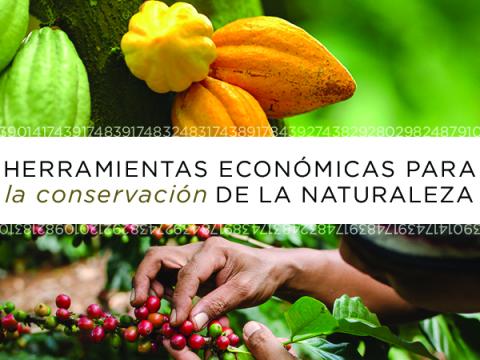
El ecoturismo como herramienta para la conservación: Pilón Lajas frente a la demanda turística de la Amazonía boliviana

Series number: 
3
Tree in Lagoa Santa, Minas Gerais, Brazil

CSF Teaches Amazon Protected Area Managers

In early December, CSF’s Marcos Amend delivered economics know-how to students in the Professional Masters for Protected Area Managers program run by INPA (National Institute for Amazon Research). The program's objective is to train managers to face the challenges of protected areas management in Amazon region. This is the second time CSF has contributed to the program, which was founded by CSF course graduate Rita Mesquita.

Ronald Kaggwa, CSF alum

CSF graduate takes on the sugar industry with economic analysis

An hour drive from Kampala lies the Mabira Forest, one of the few remaining natural forest reserves in Uganda. Rich in biological diversity, the forest contributes to the livelihood of the adjacent communities and provides an opportunity for ecotourism. In 2009 the Sugar Corporation of Uganda Limited (SCOUL) requested permission from the government to use part of the Mabira Central Forest Reserve for sugarcane growing. CSF graduate Ronald Kaggwa took action.

Micronesian islands

CSF's Economic Tools for Conservation course heads to Micronesia.

Conservation Strategy Fund's Economic Tools for Conservation training course will be offered next year in Micronesia thanks to a grant from the David and Lucile Packard Foundation and a partnership with 2010 international course graduate Willy Kostka and the Micronesian Conservation Trust (MCT).

The course will be CSF's first in the Western Pacific region.

The training will support conservation of marine and forest resources in Micronesia by equipping conservation practitioners, natural resource managers and community leaders with the principles and tools of conservation economics.

CSF develops tool that analyzes opportunity cost in the Amazon

Solving our global climate crisis hinges on doing a number of things right. One is slowing - eventually stopping - deforestation, which now accounts for 15-20% of global greenhouse gas emissions. To do that we need to know how much stopping deforestation costs and where on the Earth's vast tropical belt it can be done most cost-effectively. With the support of the Gordon and Betty Moore Foundation, CSF has designed an "opportunity cost" analysis method that will work at the level of individual farms and single land uses and be scalable up to the level of entire regions.

Building fences for monkeys

Proyecto Tití is a Colombian non-profit that integrates wildlife and forest preservation with education and community development. Proyecto Tití’s work centers around the cotton-top tamarin monkey, Colombia’s cutest, but most threatened, primate.

The Economic Value of Ecosystem Services in the Exumas Cays; Threats and Opportunities for Conservation

CSF's Fernanda Alvarenga helps locals prepare Amazon business plans

CSF-Brazil analyst Fernanda Alvarenga returned to the Southern Amazonas state last week to help locals complete business plans to sustainably use forest resources. The technical assistance sessions followed a business plan training delivered with CSF's Leonardo Fleck and partners from the FORTIS consortium.

Image of Brazilian cattle at the edge of the rainforest

CSF calculates the cost of changing ranching in Amazonas

A study (in Portuguese) led by Marcos Amend of Conservação Estratégica (CSF-Brazil) has calculated the financial incentive that will be needed to change the destructive pattern of cutting a burning forest to open new pasture.

Subsídios para a pecuária e a conservação da floresta: estimativas para o município de Humaitá, Amazonas

Divulgar conteúdo