CSF Blog

Don't forget to subscribe to our RSS feed to keep up to date.

CSF partners with Uganda National Environmental Management Authority (NEMA) for infrastructure program in Africa.

Antelope in Murchison Falls National Park

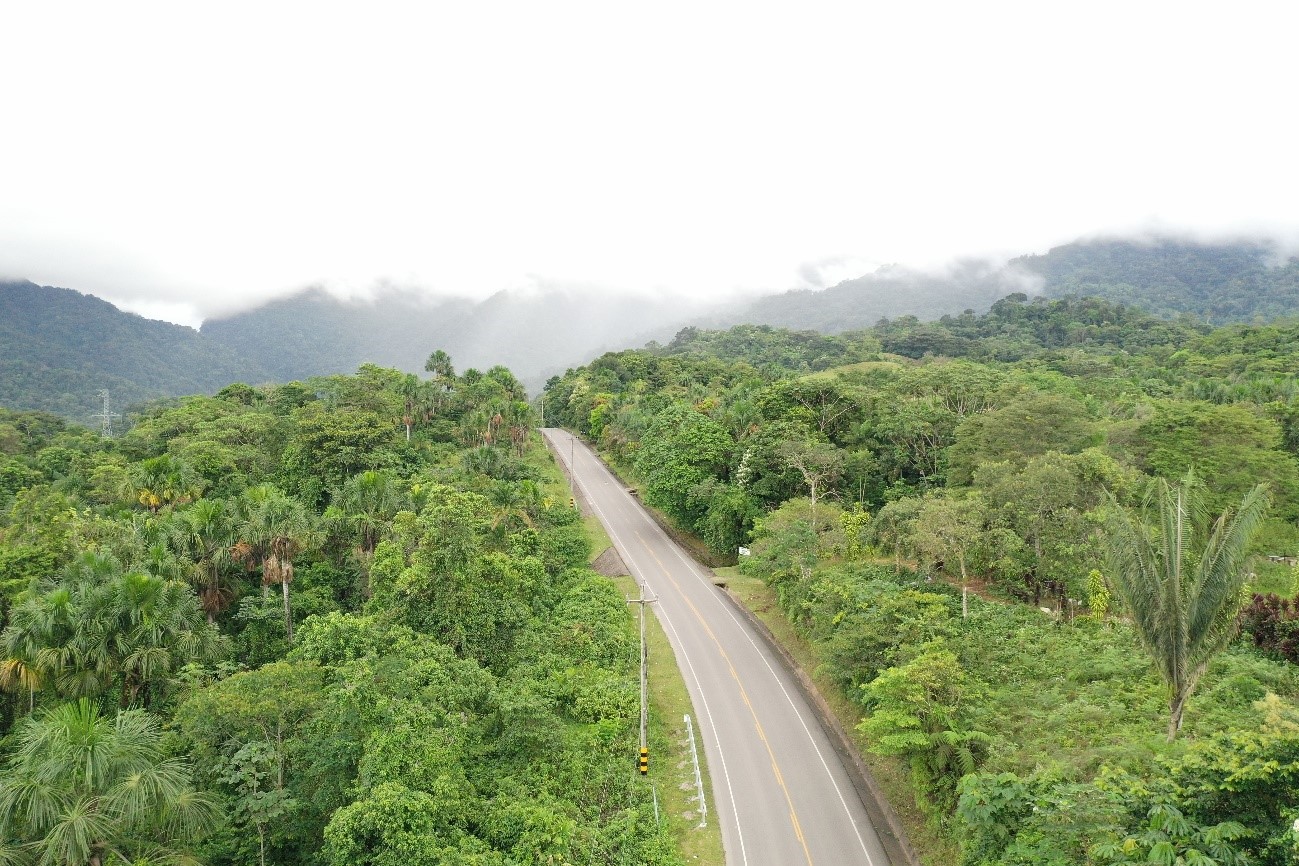
CSF's Irene Burgués and John Reid traveled to Uganda in November to establish our first long-term program in Africa. The program's initial focus will be on conserving ecosystems in the context of major infrastructure development in the Albertine Rift region shared by Uganda, Rwanda, Democratic Republic of Congo and Tanzania. The region is home to cloud forests, lowland rain forests and savannas, along with active volcanoes and endangered wildlife such as the mountain gorillas.

The Bahamas learns the value of ecotourism from Belize.

Exuma Cays

By investing in ecotourism, Belize has protected more than a third of it's total land area, as well as about 13 percent of it's marine area. As a world leader in conservation, CSF's Venetia Hargreaves-Allen believes the Bahamas could learn significantly from Belize's success. Formerly the principal investigator for the Marine Managed Area Economic Valuation in Belize with Conservation International, Hargreaves-Allen turned her focus to the Bahamas in a marine management study conducted in 2010.

CSF's Economic Tools for Conservation course heads to Micronesia.

Micronesian islands

Conservation Strategy Fund's Economic Tools for Conservation training course will be offered next year in Micronesia thanks to a grant from the David and Lucile Packard Foundation and a partnership with 2010 international course graduate Willy Kostka and the Micronesian Conservation Trust (MCT).

The course will be CSF's first in the Western Pacific region.

The training will support conservation of marine and forest resources in Micronesia by equipping conservation practitioners, natural resource managers and community leaders with the principles and tools of conservation economics.

Finding the Balance Between Biodiversity and Infrastructure

CSF will launch African and Himalayan initiatives and expand Andes-Amazon programs through $1.2 million agreement with Biodiversity Understanding in Infrastructure and Landscape Development (BUILD) program of USAID.

The United States Agency for International Development (USAID) recently announced a $1.2 million agreement with Conservation Strategy Fund (CSF) to launch a comprehensive initiative in central Africa, expand CSF’s programs in the Andes-Amazon region, and initiate a limited program in Asia’s Himalayan region. The goal of the program is to promote biodiversity conservation through infrastructure best practices.

CSF develops tool that analyzes opportunity cost in the Amazon

Solving our global climate crisis hinges on doing a number of things right. One is slowing - eventually stopping - deforestation, which now accounts for 15-20% of global greenhouse gas emissions. To do that we need to know how much stopping deforestation costs and where on the Earth's vast tropical belt it can be done most cost-effectively. With the support of the Gordon and Betty Moore Foundation, CSF has designed an "opportunity cost" analysis method that will work at the level of individual farms and single land uses and be scalable up to the level of entire regions.

New conservation tools available for use on the CSF website

HydroCalculator 2.0 and the Roads Filter have just been released for use on CSF's website.

Why does a biologist want to understand economics? To save Orangutans.

Rondang Siregar is an Indonesian biologist whose passion is protecting the wild orangutans of her native country. She recently attended CSF’s 13th annual Economic Tools for Conservation course at Stanford University where she and 27 other conservationists from around the world gathered to learn how economic tools could help them succeed.

Watch the video below to hear Rondang explain how CSF’s economic training, combined with her skills as a biologist, could help her protect these noble and endangered apes.

WWF-EFN provides support to participants in CSF's 2011 Economic Tools for Conservation Course.

Thanks to World Wildlife Fund's Russel E. Train Education for Nature (EFN), nine environmental professionals from seven countries were awarded the opportunity to attend this month’s international Economic Tools for Conservation course at Stanford University.

CSF course graduate will guide Peru's parks

Carlos Soria was among the first 22 conservationists to receive his economics education from CSF, back at our first course in 1999. The Peruvian lawyer was named this month as the new General Secretary of Peru's entire collection of national protected areas. Carlos has distinguished himself over the years at the Instituto del Bien Común (IBC), in the national ombudsman's office (Defensoría del Pueblo) and other key positions. As head of SERNANP (the Spanish acronym for the park service) he will oversee 73 nationally protected areas covering around 15% of the country's territory. They span a wide diversity of habitats, from Amazon jungles to high Andes reserves and marine parks.

Building fences for monkeys

Proyecto Tití is a Colombian non-profit that integrates wildlife and forest preservation with education and community development. Proyecto Tití’s work centers around the cotton-top tamarin monkey, Colombia’s cutest, but most threatened, primate.